How To Use Fish Attractant On Every Lure You Own
Most anglers use fish attractant wrong — too much of it, in the wrong place, at the wrong time. Here is how to apply scent to soft plastics, jigs, hard baits, blades and live bait so it actually stays on the lure and works where the fish is.
Almost every tackle box has a bottle of fish attractant rattling around in the bottom tray. Far fewer anglers get real value out of it — not because scent does not do anything, but because it gets used like cologne instead of like a tool. A smear on the way out of the truck, then forgotten for four hours.
Scent is a finishing detail. It does not replace location, retrieve speed or bait choice. What it does is buy you a second or two of extra commitment from a fish that has already decided to look. This guide covers where that second actually comes from, and how to apply attractant to every category of bait you are likely to throw.
The Three Jobs Scent Actually Does
Before the application technique makes sense, it helps to be honest about what an attractant is doing underwater. There are three separate jobs, and they matter in different situations.
1. It masks what should not be there
Sunscreen, insect repellent, gasoline, two-cycle oil, nicotine, hand sanitizer, the plasticizer smell of a brand-new bag of worms. Fish live in a chemical world and a lot of what comes off human hands reads as alarming rather than neutral. The first honest benefit of any scent is that it covers the stuff you brought with you.
2. It holds the fish on the bait longer
This is the one that puts fish in the boat. A bass that inhales a plastic worm and tastes nothing but plastic spits it in well under a second. A bait that tastes and smells like food gets held longer. On a slow bite, when you are fishing a bottom presentation and waiting to feel weight, that extra hold time is often the entire difference between a hookup and a hole in your line.
3. It draws attention in low visibility
In stained water, at night, or down deep where light is thin, fish lean harder on smell and lateral line than on sight. A scent trail dispersing off a slowly worked bait gives them something to track. This is the job scent does best in catfish, walleye and dirty-water bass situations — and it is the weakest job in gin-clear water on a fast retrieve, where the fish is hunting with its eyes and the bait is past it before any trail forms.
Think of attractant as a closer, not a magnet. It rarely brings fish from a long way off. It very reliably keeps the fish that found you from letting go.
How Much To Use
Less than you think. A pea-sized amount worked into the bait covers a standard soft plastic. Drowning a lure does not make a bigger trail — it makes a slick that washes off in three casts and leaves your hands, your rod grip and your boat deck coated.
The goal is a thin, even film that stays bonded to the bait through repeated casts. That is why a cling-style gel formula outperforms a thin liquid for most applications: liquids sheet off on the first entry, gels stay put and release slowly over a retrieve. Legacy Strike 75 is built specifically to cling rather than run, which is what lets a single application last across multiple casts instead of a single one.
Soft Plastics
Soft plastics are where scent earns the most, because they are the baits fish hold in their mouth before you set the hook.
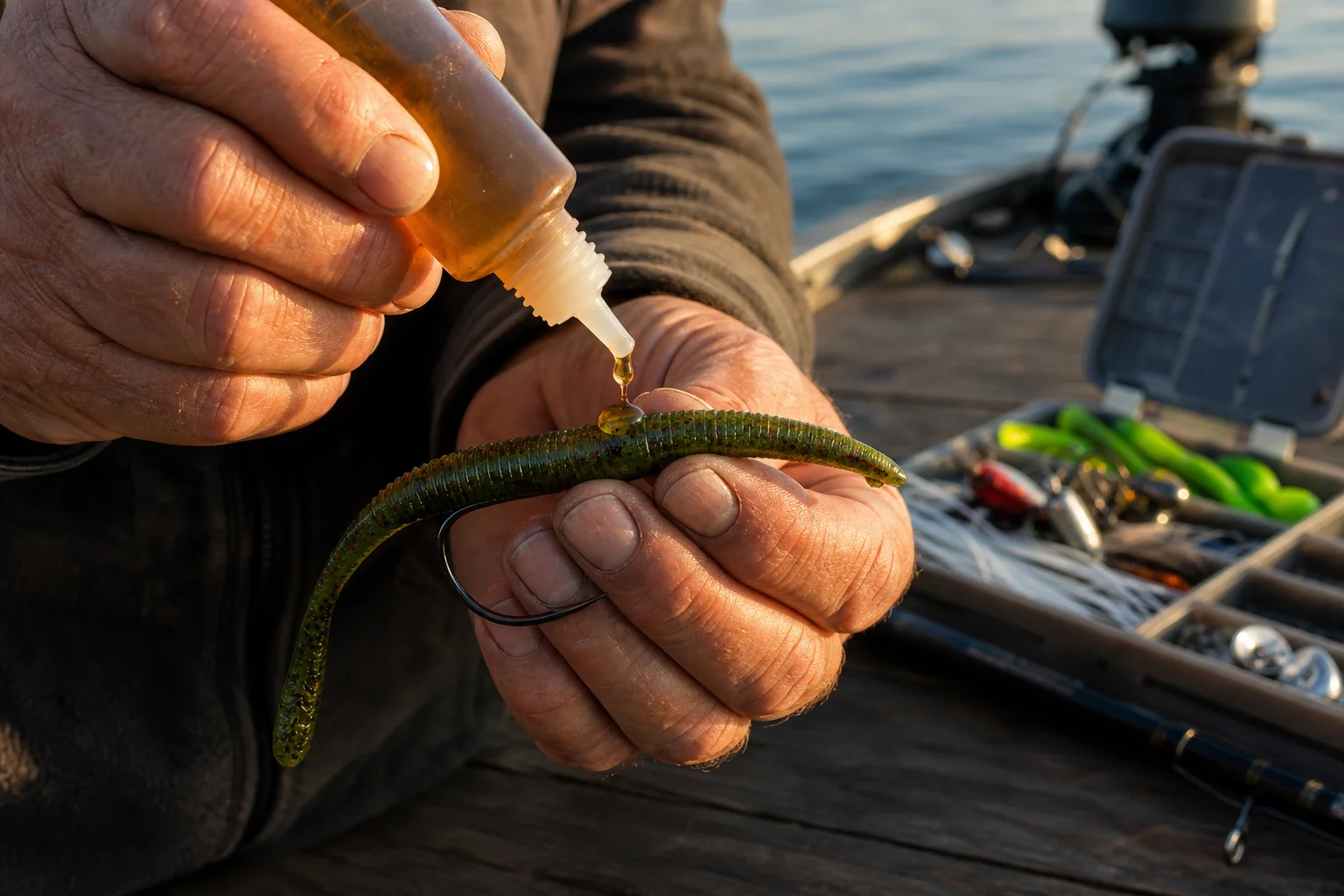
- Apply before you rig, not after. Put a small amount in your palm and roll the bait through it so the entire body is coated, including the section that will sit inside the hook bend.
- Work it into the ribs and the tail. Texture holds scent. Ribbed worms, creature bait appendages and craw pinchers all trap product where a smooth stickbait body will not.
- Treat the whole bag. Squeeze a line of attractant into the bag, close it, and knead it. Now every bait you pull for the rest of the day comes out pre-treated and you are not stopping to dose each one.
- Salt-heavy plastics need it most. Heavily salted baits leach quickly and can carry a chemical edge fresh out of the bag.
Jigs, Hair Jigs And Skirted Baits
Skirts and hair are the best scent-carriers in the entire tackle box, and most anglers ignore them completely.
Apply to the trailer first, then push a small amount up into the base of the skirt where the strands are banded. Silicone and living-rubber strands hold product against the head and release it as they pulse. On a hair jig or a marabou crappie jig, the fibers wick scent and hold it far longer than a plastic body will. On a flipping jig fished around cover, this is worth doing on every rebait, because those fish often eat on the fall and hold the bait sideways before you feel anything.
Hard Baits — Crankbaits, Jerkbaits And Topwater
Hard baits are the weakest case for scent, but they are not a lost cause. A hard plastic body sheds product almost immediately, so target the parts that hold it:
- The feathered or bucktail dressing on the rear treble, which wicks and holds like a hair jig
- The split-ring and hook-hanger recesses, where product pools instead of sheeting off
- The belly seam and lip joint on a square bill, which trap a thin film
On a suspending jerkbait worked with long pauses in cold water, this matters more than you would expect — the bait sits still long enough for a trail to form, and the fish often eats it dead-sticked.
Spinnerbaits, Chatterbaits And Blades
Treat the trailer and the skirt, and do not bother with the blades. These are reaction baits — the fish commits on flash and vibration, and the scent's only real job is making sure the bait does not taste like the sunscreen on your hands when the fish clamps down on it.
Live And Cut Bait
Live bait already smells like food, so the objective changes: you are amplifying and extending, not replacing. A light coat on a minnow, leech or crawler adds a second scent signature and helps a tired bait keep producing. On cut bait and dough baits, work a small amount into the surface and re-treat every time you check the rod. Nightcrawlers in particular wash out fast in current — a quick re-dip each cast keeps the trail alive.
How Often To Reapply
There is no universal number, but these are reliable rules of thumb:
- Every 10 to 15 casts on a normal retrieve in still water
- Every 5 to 8 casts in current, heavy chop, or when burning a bait fast
- Every single rebait after a fish, a bite-off, or a hang-up in cover
- Immediately after you apply sunscreen, refuel, eat lunch, or handle anything you would not want in the water
Build it into an existing habit. Reapply every time you check your line for nicks or retie — you are already stopping, and it costs you five seconds.
Mistakes Worth Avoiding
- Applying once and never again. The single most common error. Scent is consumable, not permanent.
- Using far too much. It wastes product, coats your gear, and does not increase the trail.
- Treating the bait but not your hands. Wipe your hands with a little attractant after sunscreen or fuel. Everything you touch afterward carries it.
- Leaving the bottle in direct sun. Heat degrades natural formulas. Keep it in a shaded compartment, cap tight.
- Expecting it to fix the wrong spot. No scent puts fish where there are none. Find them first, then close harder.
The Short Version
Use a small amount. Put it where the bait has texture — plastic ribs, skirt bands, hair, feathered trebles. Reapply on a schedule instead of a hunch. Treat the whole bag before you leave the ramp. And keep it on your hands, not just your lures.
Do that consistently and scent stops being the bottle in the bottom tray and starts being the reason the slow hours still produce.
Written by Legacy Strike 75